
Hyundai Creta vs Maruti Suzuki Grand Vitara
For most Indian compact-SUV buyers in 2026, the Hyundai Creta is the more complete overall package — a broader engine line-up including a 160 PS 1.5 turbo-petrol and a 1.5 diesel, Level 2 ADAS on the top trim, a genuinely premium cabin and India's best-selling mid-size SUV for good reason. The Maruti Grand Vitara is the smarter long-term value pick — a 27.97 km/l strong-hybrid drivetrain, an AllGrip AWD option, CNG availability and Maruti's ~3900-strong service network. Buy the Creta if you want the segment's most refined highway drivetrain, the richest features, and a proper diesel. Buy the Grand Vitara if fuel economy, AWD, or the lowest long-term running cost matter most. This page breaks down the AI verdict, spec-by-spec table, ownership outlook and final recommendation.

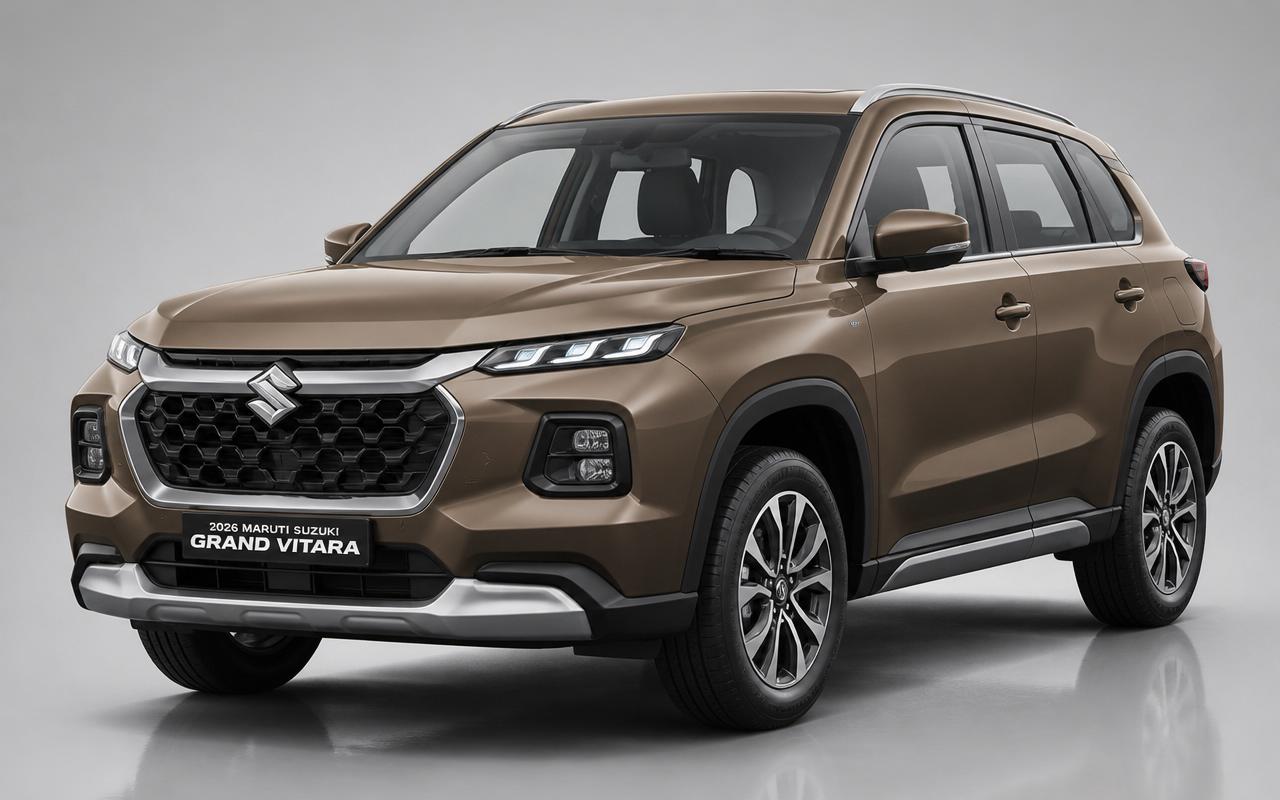
Overall winner: Hyundai Creta
The Hyundai Creta wins the overall verdict on the strength of its 160 PS turbo-petrol, factory diesel option, standard 6 airbags across the range, Level 2 ADAS on the top trim and a more premium cabin. The Grand Vitara wins on strong-hybrid mileage, AllGrip AWD, CNG availability and Maruti's service reach. Buy the Creta if you want the more feature-loaded, refined highway SUV; buy the Grand Vitara if you want the cheapest to run over 8–10 years.
Specification comparison
Side-by-side specs for Hyundai Creta and Maruti Suzuki Grand Vitara.
| Spec | Hyundai Creta | Maruti Suzuki Grand Vitara |
|---|---|---|
| Length | 4330 mm | 4345 mm |
| Width | 1790 mm | 1795 mm |
| Height | 1635 mm | 1645 mm |
| Wheelbase | 2610 mm | 2600 mm |
| Ground clearance | 190 mm | 210 mm |
| Boot space | 433 L | 373 L |
| Kerb weight (petrol) | 1265 kg | 1180 kg |
| Ex-showroom (base petrol) | ₹11.11 L | ₹11.42 L |
| Ex-showroom (top variant) | ₹20.30 L | ₹19.99 L |
| Naturally aspirated petrol | 1.5 MPi, 115 PS / 143.8 Nm | 1.5 K15C mild hybrid, 103 PS / 137 Nm |
| Turbo-petrol engine | 1.5 T-GDi, 160 PS / 253 Nm | Not offered |
| Strong-hybrid engine | Not offered | 1.5 TNGA + e-motor, 116 PS / 141 Nm |
| Diesel engine | 1.5 CRDi, 116 PS / 250 Nm | Not offered |
| CNG option | Not offered | 1.5 K15C CNG, 88 PS |
| Transmissions | 6 MT / IVT / 7-DCT / 6 AT (diesel) | 5 MT / 6 AT / e-CVT |
| AWD availability | Not offered | AllGrip Select (petrol MT) |
| ARAI mileage (petrol NA) | 17.7 km/l | 21.11 km/l |
| ARAI mileage (turbo/hybrid) | 18.4 km/l (T-GDi) | 27.97 km/l (strong hybrid) |
| ARAI mileage (diesel/CNG) | 21.8 km/l (diesel) | 26.6 km/kg (CNG) |
| Real-world mileage | 13–15 km/l (petrol), 18–20 km/l (diesel) | 24–26 km/l (hybrid), 16–18 km/l (petrol) |
| Airbags (standard) | 6 across all trims | 6 (Alpha only) / 2 (rest) |
| Crash rating | Global NCAP 5★ adult / 5★ child | Global NCAP 5★ adult / 5★ child |
| ADAS | Level 2 ADAS (SX(O)) | Not offered |
| Sunroof | Panoramic (SX and up) | Single-pane (Zeta+ and up) |
| Infotainment | Twin 10.25" curved displays, Bose 8-speaker | 9" SmartPlay Pro+, Infinity 6-speaker |
| Ventilated front seats | Yes (SX and up) | Yes (Alpha only) |
| Ventilated rear seats | Yes (SX(O)) | Not offered |
| Standard warranty | 3 yr / 1,00,000 km | 2 yr / 40,000 km |
| Hybrid battery warranty | N/A | 3 yr standard (8 yr extendable) |
| Service centres (India, 2026) | ~1400 | ~3900 (Arena + Nexa) |
Pros and cons
Hyundai Creta
- + Only compact SUV in this pair with a genuine 160 PS turbo-petrol and a proper 116 PS diesel — the segment's most versatile drivetrain line-up
- + Six airbags standard across every trim from base E to top SX(O), backed by a Global NCAP 5-star adult and child rating
- + Level 2 ADAS on the SX(O) — adaptive cruise, lane-keep assist, forward-collision warning, blind-spot monitor and rear cross-traffic alert
- + Twin 10.25-inch curved displays, panoramic sunroof, Bose 8-speaker audio and rear ventilated seats give the Creta a genuinely premium cabin feel
- + 433 L boot space is roughly 60 L larger than the Grand Vitara — meaningful on family airport runs and holiday luggage
- + 3-year/1,00,000 km standard warranty is a full year and 60,000 km more than the Grand Vitara's 2/40,000 baseline
- + Ride tuning is softer and more absorbent for Indian broken-road surfaces — the Creta's suspension is a well-known highlight of the segment
- − Naturally aspirated 1.5 petrol returns only 13–15 km/l real-world — expensive to run for high-mileage owners at ₹8+/km
- − No hybrid, no AWD and no CNG option — a real gap versus the Grand Vitara for buyers who prioritise running cost or grip
- − Fewer service centres (~1400) than Maruti, especially in tier-3 and rural areas — spare part waits are longer outside metros
- − DCT on the turbo has a known jerkiness at crawl speeds — city rush-hour is not its comfort zone
- − Top SX(O) turbo pushes past ₹22 lakh on-road — the sharpest-value Creta variants are actually the mid-trims, not the flagship
Maruti Suzuki Grand Vitara
- + 1.5 TNGA strong-hybrid delivers 27.97 km/l ARAI and 24–26 km/l real-world — segment-best economy that saves ₹40,000+/year at 15,000 km
- + Only SUV in this pair to offer AllGrip Select AWD — a genuine advantage on wet monsoon highways, hill stations and unpaved farm roads
- + CNG variant at 26.6 km/kg gives a per-km running cost near ₹3.5 — the cheapest compact-SUV proposition on sale
- + Maruti's ~3900 service centres nationwide mean shorter waits, cheaper labour, and easier spare-part availability in tier-2/3 cities
- + 210 mm ground clearance is 20 mm more than the Creta — clears aggressive speed breakers and pothole-heavy roads more confidently
- + Nexa showroom experience and stronger 62–65% five-year resale in most Indian markets protect long-term ownership economics
- − No factory ADAS at any trim — a real gap when even mainstream rivals now ship Level 2 systems
- − Six airbags reserved for the top Alpha trim; base Sigma and Delta still ship with only two
- − Petrol MT and mild-hybrid MT feel underpowered at 103 PS — the Grand Vitara has no turbo answer to the Creta T-GDi
- − Standard vehicle warranty of 2 years/40,000 km is the weakest cover in the segment
- − No diesel option — a genuine miss for high-mileage highway buyers who value diesel torque and range
Who should buy which?
Buy the Hyundai Creta if…
Buy the Hyundai Creta if features, safety kit, drivetrain choice or highway refinement matter most. Four buyer profiles fit the Creta best. The highway-first buyer doing 300 km+ inter-city runs weekly gets the segment's only 160 PS turbo-petrol or a proper 116 PS diesel — both cruise effortlessly at 120 km/h. The safety-first family gets 6 airbags standard across the range, Global NCAP 5-star ratings and Level 2 ADAS on the SX(O) — a genuinely fatigue-reducing highway kit. The feature-conscious upgrader from a hatchback or sedan gets twin 10.25-inch curved displays, panoramic sunroof, Bose audio, ventilated seats front and rear, and a cabin that feels a class above. The five-seat family who values boot space gets 433 L — 60 L more than the Grand Vitara. For these profiles, the Creta SX(O) 1.5 Turbo DCT at roughly ₹22 lakh on-road, or the SX Diesel AT at roughly ₹20 lakh on-road, is the confident recommendation.
Buy the Maruti Suzuki Grand Vitara if…
Buy the Maruti Suzuki Grand Vitara if fuel economy, AWD, service reach or lowest running cost matter most. Four buyer profiles fit the Grand Vitara best. The high-mileage owner doing 20,000+ km/year saves ₹40,000+ annually on fuel with the strong-hybrid returning 24–26 km/l real-world — the Creta cannot match this at any price. The hill-station or wet-monsoon buyer in Uttarakhand, Himachal, the Northeast or coastal Karnataka gets AllGrip Select AWD with Snow, Sport and Lock modes — a real advantage on slippery surfaces. The tier-2/3 city buyer in Nashik, Coimbatore, Vijayawada or Guwahati gets Maruti's ~3900-strong service network, cheaper spare parts and shorter wait times. The CNG-first buyer with a 1500+ km/month duty gets 26.6 km/kg and per-km costs below ₹3.5. For these profiles, the Grand Vitara Alpha Strong Hybrid at roughly ₹22 lakh on-road or the Alpha+ AllGrip petrol MT at roughly ₹18 lakh on-road is the confident recommendation.
Recommend the Hyundai Creta SX(O) 1.5 Turbo DCT for the highway-first family or feature-conscious upgrader with a ₹22 lakh on-road budget — 160 PS of turbo torque, Level 2 ADAS, twin curved displays and standard 6 airbags make it the more complete premium package, and the Grand Vitara has no direct answer for those four advantages. Recommend the Maruti Grand Vitara Alpha Strong Hybrid for the high-mileage owner, the hill-station buyer or the running-cost-first family with a ₹22 lakh on-road budget — 27.97 km/l ARAI, AllGrip AWD availability, CNG option and Maruti's service reach are decisive long-term advantages. Decide with two questions: is fuel economy your top priority? Yes means Grand Vitara. Do you want ADAS, a turbo, or a diesel? Yes means Creta. Both are correct answers for the right buyer.
Frequently asked questions
Which is better, Hyundai Creta or Maruti Grand Vitara?+
For most Indian buyers the Hyundai Creta is the better overall pick — it ships standard 6 airbags across every trim, offers Level 2 ADAS on the SX(O), a 160 PS turbo-petrol, a 116 PS diesel, and a more premium cabin with twin 10.25-inch curved displays. The Grand Vitara is the better pick only if fuel economy is your top priority (27.97 km/l ARAI on the strong hybrid), you need AllGrip AWD, want a CNG option, or rely on Maruti's ~3900-strong service network in a tier-2/3 city.
Which has better mileage, Creta or Grand Vitara?+
The Grand Vitara, by a wide margin. Its 1.5 TNGA strong-hybrid returns 27.97 km/l ARAI and 24–26 km/l real-world — nearly 10 km/l more than the Creta petrol's 13–15 km/l. Even the Creta diesel at 20–21 km/l real-world falls short. On CNG the Grand Vitara returns 26.6 km/kg for a per-km cost around ₹3.5 — the cheapest compact-SUV running cost on sale.
Does the Creta or Grand Vitara have ADAS?+
Only the Creta. The Hyundai Creta SX(O) ships Level 2 ADAS with adaptive cruise control, lane-keep assist, forward-collision warning, blind-spot monitor and rear cross-traffic alert. The Grand Vitara does not offer ADAS at any trim or price — a genuine gap in 2026 when the technology has become mainstream even in ₹15 lakh segments.
Which is safer, Creta or Grand Vitara?+
The Creta is the safer default pick because it ships six airbags standard across every trim, from base E to top SX(O), plus Level 2 ADAS on the flagship. The Grand Vitara reserves six airbags for the top Alpha trim only — base Sigma and Delta still ship with just two. Both hold Global NCAP 5-star adult and child ratings under the latest protocol, so structural safety is equivalent; the differentiators are airbag coverage and active safety.
Does the Grand Vitara offer AWD? Does the Creta?+
Only the Grand Vitara. Maruti's AllGrip Select AWD is available on the petrol MT (Zeta+ and Alpha+ trims) with Auto, Sport, Snow and Lock modes — a real advantage on hilly, wet or lightly unpaved roads. The Creta is front-wheel-drive only across every engine, transmission and trim.
Which has better resale value, Creta or Grand Vitara?+
It depends on where you live. In metros like Mumbai, Bengaluru and Delhi the Creta holds roughly 60–63% at five years thanks to Hyundai's brand equity and India's #1 mid-SUV sales record. In tier-2/3 cities the Grand Vitara holds 62–65% thanks to Maruti's service reach and easier spare-part availability. Both are strong; the winner depends on location.
Is the Creta turbo worth the extra money over the Creta petrol or the Grand Vitara?+
For highway-heavy buyers, yes. The 1.5 T-GDi delivers 160 PS and 253 Nm with a 7-speed DCT, doing 0–100 km/h in roughly 9.7 seconds — a full 3 seconds quicker than the naturally aspirated 1.5. On expressways it cruises effortlessly at 120 km/h with plenty of overtaking headroom. For city-only owners the price premium is harder to justify — the naturally aspirated petrol or the diesel are the smarter picks.
Which has more boot space and rear-seat comfort?+
The Creta wins both. Boot space is 433 L on the Creta versus 373 L on the Grand Vitara — a 60 L advantage that matters on family airport runs. Rear-seat legroom is roughly 25 mm more thanks to a 10 mm longer wheelbase, and the bench itself is wider and softer. The Grand Vitara's rear is competent, but the Creta is genuinely the segment benchmark.
Which is cheaper to maintain long-term, Creta or Grand Vitara?+
The Grand Vitara, by roughly 15–20%. Maruti spare parts are 10–15% cheaper than Hyundai equivalents, labour rates at Arena and Nexa are lower, and the ~3900 service centre network means shorter waits and less downtime. Over five years and 60,000 km, expect the Grand Vitara to save roughly ₹40,000–60,000 in service costs versus a comparable Creta.
Should I buy the Creta SX(O) Turbo DCT or the Grand Vitara Alpha Strong Hybrid?+
Both cost roughly ₹22 lakh on-road but target completely different buyers. Choose the Creta SX(O) Turbo DCT if you want the more powerful, feature-rich, ADAS-equipped highway SUV with a premium cabin. Choose the Grand Vitara Alpha Strong Hybrid if fuel economy, long-term running cost and Maruti's service reach matter more. If you drive 20,000+ km/year, the Grand Vitara pays for itself in fuel savings; if you drive under 12,000 km/year and value features, the Creta is the smarter buy.
Related comparisons
Still unsure? Let the AI decide.
Answer a few questions and get a personalized recommendation tailored to your budget, family, and city.
Start AI Advisor →